Bhopal Institute of Technology And Management, Bhopal is a premier self-financed Engineering college of M.P. Established in the year 2009.The institute is an entity of Globus Institute of Engineering & Technology, which is an education society came in to vogue in 2002 with the intent to spread technical education with ease & convenience to all aspirants the society has got three other Engineering colleges and two Pharmacy colleges under its fold. All the colleges are approved by AICTE and affiliated to RGPV within a short span of time all Institutions have carved a legible imprint of there quailty of education.
A planned pedagogy is applied to transform a student to a efficient Technocrat and refine a progressive and advancing career growth.
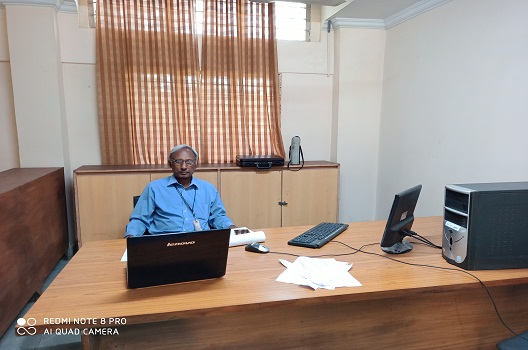
It gives me immense pleasure in welcoming, on behalf of the entire campus community of the Bhopal Institute of Technology and Management, Bhopal. The Institute has come into its existence as in the year 2009. We at BITM visualize our rich architecture decorated with green ambience to be place where ideas are born, leadership is developed and new and exciting methodologies are synergized for establishing optimum learning opportunities for the Technical Graduates. The mission of our Institute is to provide good engineers, technocrats and academicians blessed with intensive as well as extensive knowledge of the subject and good human values so that it may achieve not only a Nationwide but Worldwide name and fame in the modern era of technical education. In order to achieve our goal of standardization in technical education, we are planning to organize industrial tours, National Seminars and workshops together with guest lectures on latest topics by the eminent personalities of their respective field for the benefit of our students. click to view more..
Our Vision:
To nurture world class intellectual growth by imparting High Quality, Futuristic Technical Education to emerge as one of the best technical institutes, to serve the mankind.

The institution is committed to disseminate and preserve knowledge by stimulating intellectual growth through research and innovation.

Promoting faculty development programs and student interactions with renowned scholars from other technical institutes and industry.

Providing excellent infrastructure to facilitate effective delivery of quality learning through eminent faculty.

To accomplish National Centre of Excellence in collaboration with Industry.

To meet industry expections Conducting skill development courses.

Providing quality technical education at par with global standards..